
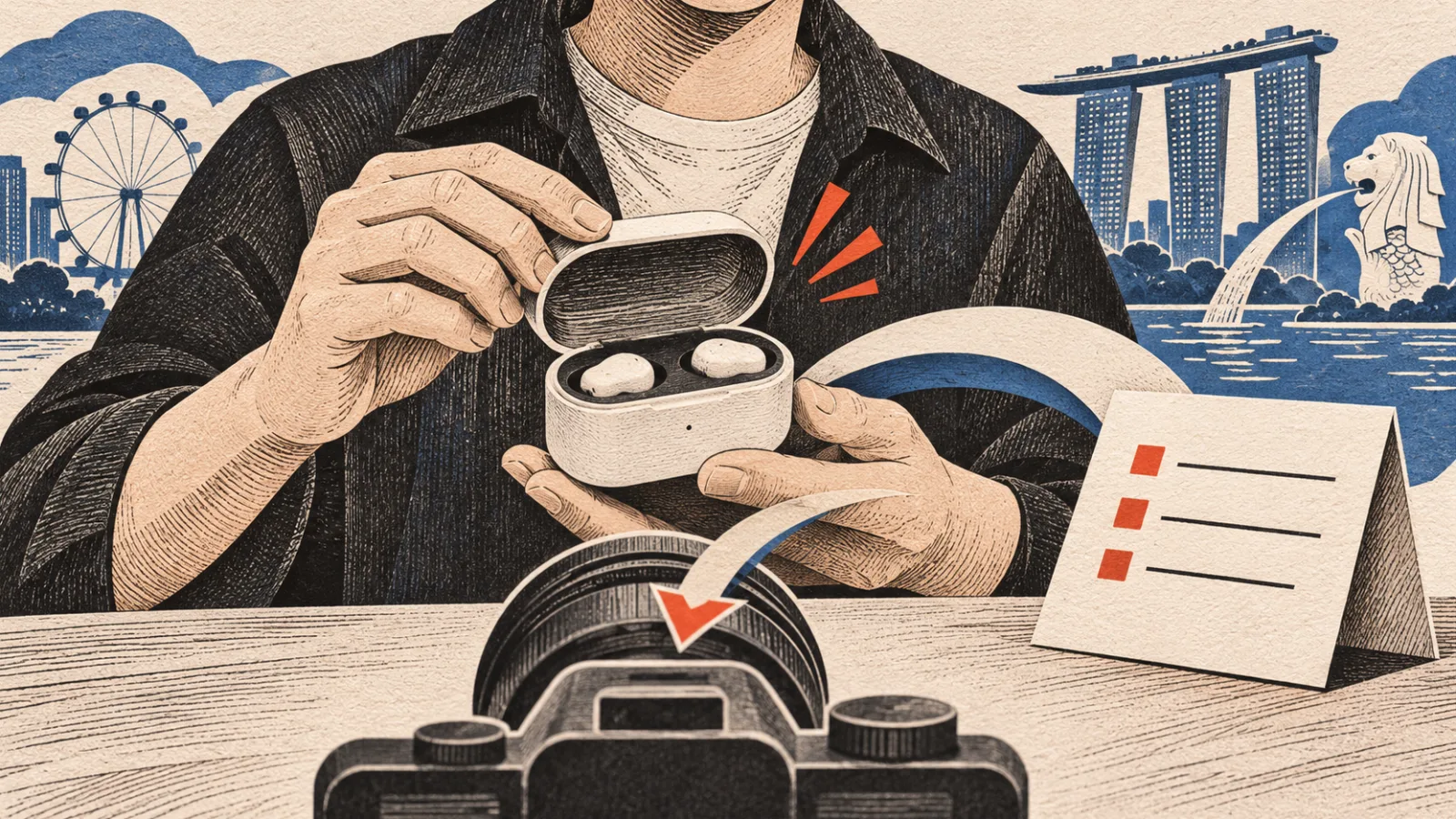
If you are commissioning a Singapore tech creator to demonstrate a product, give them a test brief before you ask for a rate card. The brief should name the buyer's question, the exact product and firmware, a repeatable demonstration, claims that may be made, the Singapore purchase route, disclosure, usage rights and the evidence you expect back. This lets the creator explain a real decision instead of producing another unboxing that looks good but cannot be checked.
I would start with one product and one buyer question. For headphones, that might be: “Can I hear a call clearly beside traffic on my commute?” For a portable light: “Will it illuminate a face at a desk without a distracting reflection?” These are proposed tests, not claims that a particular device passes them.
Start with a product test, not a creator tier
Write the decision first: what should a Singapore buyer understand after watching, and where can they verify the model, warranty and availability? Record the local product page or authorised seller before filming. If the Singapore purchase route is unconfirmed, do not imply local stock, a local warranty or a price.
Then give every shortlisted creator the same test card:
Scroll horizontally to read all three columns.
| Brief field | What to supply | What the video should show |
|---|---|---|
| Product identity | Model, variant, firmware or app version, supplied accessories | The exact item and setup used |
| Buyer question | One decision a viewer needs to make | A visible demonstration that addresses it |
| Conditions | Location, lighting, connected phone, distance, duration | Enough context to repeat the test |
| Claim evidence | Approved specification sheet and any limits | Claims spoken accurately, with exceptions stated |
| Purchase route | Singapore destination, availability and warranty owner | A clear next step without invented price or stock |
| Commercial terms | Fee or loan, disclosure, edits, posting and reuse rights | A recognisable sponsorship disclosure and agreed deliverables |
| Report | Links, dates, tagged destination and permitted metrics | What happened in the agreed observation window |
This is a creative brief, not a laboratory certification. A short video can make an experience understandable; it cannot prove every performance claim. Keep measured results, personal impressions and manufacturer specifications separate in the script.
Choose a demonstration that survives scrutiny
For audio, I would ask for an unprocessed sample and a second sample under a stated noisy condition. The creator should say which phone, connection and recording path were used. A cut between the two scenes is fine if the video labels them; calling it a controlled comparison would require the conditions to be genuinely comparable.
For a fan, show the device at a stated setting, distance and duration, with the room context visible. Do not turn an edited sound track into a noise measurement. For a small video light, show the subject at a known distance and angle, then show a before-and-after frame under the same camera settings. The brand should check product safety instructions before asking someone to demonstrate charging, heat or placement.
I would put an “unknown” box on the test card. If the team cannot verify battery life, a certification, a compatibility claim or a Singapore warranty, the creator should leave it out or describe the limited observation. This is more useful to a buyer than a confident but uncheckable superlative.
Match the format to the question
Singapore has both individual technology reviewers and technology publications. Their own descriptions show different editorial formats: Aaron x Loud and Wireless presents a creator-led audio review channel; Tech Lingo describes itself as a Singapore-based technology review platform with written and video reviews; HardwareZone describes a publication spanning short unboxings, micro reviews and longer explainers. These are public format examples, not a PONGO shortlist, endorsement, partnership claim or evidence of Singapore audience share for a proposed campaign. Verify current channel, audience geography and commercial terms directly before any approach.
For a single operating question, a short demonstration may be enough. For a device with several trade-offs, a longer review can show setup, limits and use over time. A publication's editorial review is not the same product as a paid creator deliverable: ask what editorial control, disclosure and reuse are actually available. Do not assume that a press loan buys a favourable verdict.
Our Singapore micro-influencer selection guide covers general audience and candidate checks. This brief goes one step deeper: the product test and claims a technology creator needs to execute. Neither a creator's location nor a media kit by itself proves that their viewers are the Singapore buyers you need.
Give the creator room to report limits
Agree which claims are verified specifications and which are observations. Ask the creator to show a failed setup or a limitation if it matters to the purchase decision. The brand can review factual errors and restricted claims without scripting a supposedly independent opinion.
Singapore's Advertising Standards Authority social media guidance covers commercial relationships and disclosure. Its guidance notes distinguish paid promotion and supplied-product reviews. Put the intended disclosure in the brief and check how it appears in the final post. Also agree who may reuse the footage, for how long, on which channels and whether paid amplification is included; those rights are separate from posting.
Use prior work as a method example, with the market labelled
Our HAYLOU headphone case describes Russian-language YouTube reviews and Spanish-language TikTok work around the S30 headphones. Our ZHIYUN portable-lighting case includes creator settings in Japan, Indonesia and Vietnam. We use those cases to illustrate how a technical feature can be shown in a use situation. They are not Singapore campaign results, a list of Singapore creators, or evidence that the same creative will sell a product here.
For a Singapore pilot, request a fresh local test, the actual approved claims and the intended buyer route. If the product needs a safety or regulatory review, the brand's product owner must supply it; a creator video is not a substitute.
Decide what the pilot taught you
Before publishing, agree on the posting date, tagged destination, observation window and data owner. Afterward, separate reach and engagement from qualified visits, enquiries and sales. Report missing creator analytics or unattributed sales as Unknown, not zero. Keep the raw post, the final brief, the claim approvals and the report so the next creator can be compared against the same question.
If you want help turning a consumer-tech product into a testable Singapore creator brief, send us the model, buyer question, verified specifications, local purchase route, intended platform and usage-rights needs through our influencer marketing service page. We can assess the brief and pilot design without promising a particular reach or sales result.
Frequently asked questions
What should a Singapore tech creator brief include?
Include the exact product and variant, buyer question, test conditions, approved claims, local purchase route, disclosure, deliverables, usage rights and reporting window. Give a named owner to any missing fact.
Is an unboxing enough for a product demo?
An unboxing can show what arrives in the box. A useful demo also shows the setup and a buyer-relevant task under stated conditions. Ask for a longer format when the purchase decision depends on trade-offs that a short clip cannot show.
Can a media kit prove Singapore audience fit?
No. A media kit is a starting statement. Ask for dated, platform-provided audience geography for the relevant channel and compare it with the intended Singapore buyer. Record missing insight as Unknown.
May a brand approve a creator's review?
Agree on factual and claim review, disclosure and safety boundaries in advance. Keep the creator's genuine observation distinct from brand-supplied claims, and do not describe a paid deliverable as independent editorial coverage.
Which pilot metrics matter most?
Choose the metric tied to the buyer action: qualified product-page visits, enquiries or measured sales if attribution is actually available. Reach, views and engagement explain distribution but do not by themselves establish a sale.